Salusbury Road Queens Park Removals for Narrow Street Access: A Practical Guide for a Smoother Move
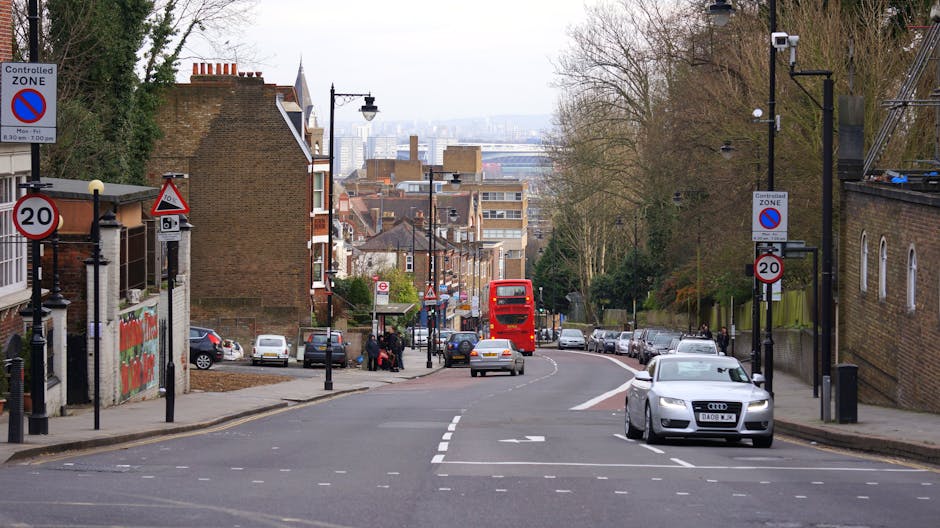
Moving on Salusbury Road in Queen's Park can look simple on a map and then feel very different once a van arrives. Tight parking, busy traffic, parked cars, awkward loading space, and neighbours who still need to get past every single thing can turn a normal move into a proper logistical puzzle. That is exactly why Salusbury Road Queens Park removals for narrow street access need a different approach from a standard house move. The good news? With the right planning, the right vehicle choice, and a sensible loading strategy, the whole thing can run far more calmly than people expect.
This guide walks you through what makes narrow-street moving tricky, how to plan around the access constraints, and what practical decisions matter most if you want to avoid delays, damage, or last-minute stress. A lot of the heavy lifting, frankly, happens before anyone picks up a box.
Table of Contents
- Why Salusbury Road Queens Park removals for narrow street access Matters
- How Salusbury Road Queens Park removals for narrow street access Works
- Key Benefits and Practical Advantages
- Who This Is For and When It Makes Sense
- Step-by-Step Guidance
- Expert Tips for Better Results
- Common Mistakes to Avoid
- Tools, Resources and Recommendations
- Law, Compliance, Standards, or Best Practice
- Options, Methods, or Comparison Table
- Case Study or Real-World Example
- Practical Checklist
- Conclusion
- Frequently Asked Questions
Why Salusbury Road Queens Park removals for narrow street access Matters
Queen's Park has its own rhythm. Salusbury Road is lively, local, and convenient, but that convenience can work against a moving day if the street is too tight for a larger vehicle or if the loading point is blocked by everyday traffic. A move that would be straightforward on a wider road can suddenly need more time, more coordination, and a better plan for carrying items between property and van.
Why does this matter so much? Because removals are not just about transport. They are about access. If access is poor, even excellent packing and a capable team can be slowed down. You might need to use a smaller removal van, split the load, or schedule timed arrivals so the vehicle can stop safely without blocking the road. On a narrow street, those details are the difference between a smooth handover and a stressful scramble at the kerb.
There is also the neighbour factor. Let's face it, nobody wants a moving team to block a driveway, scrape a parked car, or leave everyone waiting because the lift-out route was not checked in advance. Good access planning keeps the move respectful as well as efficient.
Expert summary: On narrow streets, the best removal plan is usually the one that reduces time spent parked, limits the distance carried by hand, and uses a vehicle that actually fits the road rather than forcing the road to fit the vehicle.
How Salusbury Road Queens Park removals for narrow street access Works
The process is usually more methodical than people first think. A good removal plan for a tight street starts with an access check, then moves into vehicle choice, timing, packing method, and load sequencing. In practical terms, the team works backwards from the street conditions rather than forwards from the list of items.
1. Access assessment first
Before move day, the narrowest point on the route should be considered: doorway width, hallway bends, kerb space, parked cars, and whether the van can stop close enough for efficient loading. This is especially useful for flats, basement homes, and properties where furniture must be carried a little farther than you would ideally like.
2. Vehicle selection matters more than usual
On a broader road, a larger vehicle can make sense. On Salusbury Road, though, a compact man with a van setup or a smaller man with van arrangement may be the smarter choice. That does not mean compromising on quality. It means matching the vehicle to the street, the load, and the parking reality. Some moves also work better with a larger moving truck staged elsewhere, but only if access genuinely allows it.
3. Loading strategy is planned around space, not guesswork
Items are usually loaded in a set order so that the most awkward pieces come out first or last, depending on the building layout. Heavy items such as wardrobes, appliances, or a piano need clear routes and extra hands. If your move includes delicate or unusually bulky items, a specialist service such as piano removals or broader furniture removals may be more appropriate than a standard general load.
4. Timing avoids the worst of the bottlenecks
In narrow-street areas, timing is not a minor detail. Arriving a little earlier or outside the most congested windows can make a surprising difference. If a move is part of a larger relocation, a team offering same day removals might be useful, but only if the practical access window lines up with the property conditions and local traffic patterns. Speed is handy. Rushing is not.
Key Benefits and Practical Advantages
A well-planned narrow-street move brings some real benefits, and not just in the "less stress" sense, though that is a big one. The biggest advantage is control. Once you control access, vehicle size, and loading order, the move becomes much more predictable.
- Less carrying distance: A good stopping point means fewer steps for each box and less chance of knocks or strain.
- Lower risk of damage: Fewer tight turns, fewer awkward lifts, and fewer sudden manoeuvres.
- Better time management: Narrow roads can create delays, but a planned schedule reduces them significantly.
- Cleaner handover: You are less likely to upset neighbours, block doorways, or cause street congestion.
- More suitable vehicle choice: The move can be matched to the road rather than squeezed into it.
There is also a financial angle. If access is planned properly, you are less likely to pay for avoidable waiting time, repeat trips, or additional handling because something could not be moved safely in one go. That is one reason many people prefer to compare options through pricing and quotes early on instead of leaving it until the week before.
And, honestly, the emotional benefit is underrated. A move day can feel noisy, full of door clicks, bubble wrap rustling, and somebody always asking where the kettle is. Anything that reduces the chaos is worth doing.
Who This Is For and When It Makes Sense
This kind of move is not only for large house relocations. In fact, Salusbury Road narrow-access planning helps a wide mix of people. It is especially useful if your property sits on a busy stretch, if you are in a flat, or if your building has limited loading space.
- Flat movers: People leaving or arriving in upper-floor homes, especially where stairwell turns are tight. A dedicated flat removals service can be a better fit than a generic solution.
- Families moving home: Larger loads, children's furniture, and more boxes often need careful sequencing. A wider home moves approach can help when the move includes mixed household contents.
- Homeowners and landlords: If access is awkward and time is tight, a reliable house removals or house removalists option may be the right call.
- Students and sharers: Smaller loads are often ideal for student removals or short-notice moves.
- Businesses: If you are moving a small office or work setup, narrow access still matters. Commercial moves and office removals each need their own access planning.
Sometimes the need is obvious. Sometimes it sneaks up on you. You think the move is "just down the road" and then realise the road itself is the obstacle.
Step-by-Step Guidance
Here is the part most readers want: what should actually happen, in what order? The key is to make decisions early enough that you are not improvising with a wardrobe on the pavement while a neighbour waits behind you with a shopping trolley.
- Measure the access points. Check entrance widths, stair turns, lift size, and any tight corners in the building. If a sofa barely made it in, it may not leave cleanly without a plan.
- Review the street itself. Look at kerb space, parking restrictions, one-way sections, and how far the van may need to stand from the entrance.
- List the awkward items. Bulky beds, mirrored wardrobes, glass tables, and appliances need special attention.
- Choose the right vehicle size. A smaller van may be far more practical than a larger truck if the road is tight.
- Pack for fast handling. Use clear labels, keep essentials separate, and avoid overfilled boxes that become hard to carry.
- Decide whether you need packing help. If time is short or the load is complex, packing and boxes support or packing and unpacking services can save a lot of faff.
- Confirm arrival timing. Coordinate a realistic window for loading and unloading. A move with narrow access rarely benefits from a vague "sometime in the morning" approach.
- Prepare the final exit route. Move bins, bikes, and loose items out of the way so the carrying path is as clear as possible.
If the property is only a temporary stop or if there is a gap between moving out and moving in, short-term storage can be an excellent pressure release. It is often better to split the move properly than to force everything into one awkward day.
Expert Tips for Better Results
These are the small things that tend to make the biggest difference. Not glamorous, but useful. Very useful.
- Keep the load near the entrance: If possible, stage boxes in one room close to the exit so loading is quicker and less disruptive.
- Use consistent box sizes: It sounds boring, but it helps the team stack safely and work faster.
- Protect walls and corners: In narrow hallways, a little extra padding on corners can prevent those annoying scuffs that always seem to appear on fresh paint.
- Separate fragile items early: Don't leave breakables mixed into general boxes. That ends badly. Usually with silence, then regret.
- Have one person available to answer questions: A single point of contact avoids repeated decisions and reduces confusion.
- Think in routes, not rooms: Ask yourself how each item travels from room to van, not just where it starts and ends.
One more thing: if your move includes office furniture, filing cabinets, or shop stock, choose a team with clear experience in removal services rather than assuming every mover handles business jobs equally well. A tidy route is one thing. A tidy route with business equipment is another.
Common Mistakes to Avoid
Most moving headaches on narrow roads are avoidable. The tricky bit is that the mistake often feels small at the time.
- Booking a vehicle that is too large: It may look efficient on paper, but a bigger vehicle can become a slower one if it cannot stop safely.
- Ignoring loading distance: Even a short walk from van to door becomes tiring when repeated fifty times.
- Not checking parking constraints: Parking assumptions are risky in Queen's Park. Best not to assume.
- Packing too late: Last-minute packing creates messy boxes, missing labels, and more handling time.
- Forgetting building access rules: Some flats, managed buildings, or shared entrances have rules about lift use, booking slots, or loading times.
- Not planning for large items separately: Heavy wardrobes and delicate instruments should not be treated like regular boxes.
There is also a quieter mistake: trying to make the move too "perfect". Sometimes people spend days organising the exact order of every saucepan and paperback, and then forget the basics of access. To be fair, the kettle still needs to get out of the house.
Tools, Resources and Recommendations
You do not need a warehouse full of gear, but a few practical items make narrow-street removals much easier. The aim is to reduce trips, protect surfaces, and keep the crew moving.
- Strong boxes: Use boxes that can actually cope with the contents. Overpacked boxes slow everyone down.
- Labels and markers: Clear room labels save time during unloading.
- Protective wrapping: Ideal for mirrors, frames, and table tops.
- Floor and corner protection: Helpful in tight hallways and on stair edges.
- Spare bags for loose items: Good for cables, fixtures, and last-minute clutter.
For readers who want a more hands-off move, it is worth looking at a broader removals service or a smaller man and van option depending on volume and access. If you only need to clear a few bulky items, furniture removals may be more suitable than paying for a full-house setup.
If you are moving into or out of a business property nearby, specialised office relocation services can help with desks, chairs, IT equipment, and timing around staff access. That is often where people underestimate the complexity.
Law, Compliance, Standards, or Best Practice
For a move on a narrow residential street, the key compliance issue is usually safe, considerate operation rather than anything exotic. In the UK, movers and customers typically need to think about road safety, loading safety, vehicle suitability, and any relevant parking or stopping restrictions. Where a road is tight, best practice is to avoid unsafe stopping, keep access open where possible, and prevent unnecessary obstruction.
Building management may also impose access rules for flats or communal properties. These can cover lift bookings, moving hours, or use of service entrances. If you ignore them, the move can be delayed for reasons that are entirely avoidable. A quick conversation with the property manager can save a lot of trouble.
Reputable movers should also pay attention to insurance, handling procedures, and safe lifting practice. If you want a clearer picture of what that looks like, the company's own insurance and safety information and health and safety policy are worth reviewing before you book. For customers who care about how belongings and materials are treated after the move, recycling and sustainability is also a sensible policy area to look at.
One small but important point: if you are comparing providers, read the terms and conditions carefully. Not because everybody is looking for a catch, but because moving jobs are much smoother when expectations are clear from the start.
Options, Methods, or Comparison Table
Different access situations call for different methods. Here is a simple comparison to help you decide what tends to fit best.
| Method | Best for | Strengths | Limitations |
|---|---|---|---|
| Small van move | Narrow streets, lighter loads, short distances | Easier parking, quicker manoeuvring, less street disruption | May require more trips for larger loads |
| Full removal truck | Large family moves where access is generous | More space, fewer trips, efficient for large volumes | Can be awkward or unsuitable on tight roads |
| Man and van | Flat moves, partial loads, flexible timing | Flexible, practical, often ideal for local access issues | Not always best for very large household loads |
| Storage first, move later | Delayed completions or split move dates | Reduces pressure, gives breathing room | Needs extra coordination and sometimes extra cost |
There is no universal winner. The best option is the one that fits the street, the load, and the day. That sounds obvious, yet it is exactly where many moves go wrong.
Case Study or Real-World Example
A typical local example goes like this. A couple moving from a first-floor flat near Salusbury Road had a sofa, a bed frame, several boxes, and a dining table to move. On paper, it looked manageable. The issue was that the street was already busy by late morning, and a larger vehicle would have struggled to stop without blocking traffic.
Instead of trying to force everything into one awkward lift, the move was broken into a smarter sequence. The fragile boxes were loaded first, the sofa and table were padded and handled separately, and the van used was compact enough to stop close to the entrance. Because the team planned for the tight road early, nobody had to carry the sofa half the length of the street. Small victory, but a real one.
The pair also had a few items they were not ready to unpack immediately, so they placed them into storage for a short period. That gave them time to settle in without tripping over boxes for a week. Honestly, that alone can change the feel of moving day.
The result was not dramatic. No triumph music, no movie-style montage. Just a calm, efficient move that respected the road, the neighbours, and the furniture.
Practical Checklist
Use this before moving day. It keeps the process grounded.
- Confirm the exact move date and access window.
- Check whether the van can stop close enough to the property.
- Measure doorways, stair bends, and any awkward internal turns.
- Identify heavy, fragile, or unusually shaped items.
- Decide whether you need packing support or supply-only help.
- Label boxes by room and priority.
- Reserve parking or loading arrangements if needed.
- Ask about insurance, safety, and handling processes.
- Prepare a clear path from the property to the van.
- Keep essentials like documents, chargers, and keys separate.
- Plan for storage if completion dates do not line up neatly.
- Choose a service level that matches your volume, not your wishful thinking.
If you are still deciding between options, it can help to compare a broader removal companies approach with a more flexible local van-based move. For many Salusbury Road jobs, flexibility wins.
Conclusion
Salusbury Road Queens Park removals for narrow street access are all about preparation, realism, and the right kind of flexibility. If the road is tight, the move needs to be tight too: tighter planning, tighter packing, tighter timing, and a vehicle that suits the street instead of fighting it. When those pieces line up, the whole experience becomes much calmer and far less disruptive.
That is really the heart of it. Good access planning does not just save time. It protects your belongings, keeps the street manageable, and makes moving day feel like a process rather than a battle. And that matters, because moving is already a lot. No need to add extra chaos if you can help it.
Get a free quote today and see how much you can save.
A thoughtful move on a narrow street can still be an easy one. Sometimes it just takes the right plan, a steady pace, and a bit of local know-how.
Frequently Asked Questions
What makes Salusbury Road in Queen's Park tricky for removals?
The main issue is access. Narrow road space, parked cars, active traffic, and limited stopping room can make loading and unloading slower than expected. That is why vehicle size and timing matter so much.
Is a large removal truck suitable for a narrow street?
Not always. A larger truck can be useful for big moves, but on a tight road it may be harder to park safely or stop close enough to the property. A smaller van is often more practical.
How do I know whether I need a man and van or a full removals service?
It usually depends on volume and access. If you have a smaller load or a property with tight street access, a flexible van-based move may be ideal. For bigger household moves, a fuller removals service might suit better.
Do I need to measure my doorway and stairs before booking?
Yes, that is a very good idea. Door widths, stair turns, and tight hallways can change how furniture is moved and whether it can be handled safely in one piece.
Can packing help make a narrow street move easier?
Absolutely. Well-packed boxes are quicker to carry, easier to stack, and less likely to split during loading. Services like packing and boxes or packing and unpacking can save a lot of time.
What if I need to store some items before or after the move?
Short-term storage is a practical solution when move-in and move-out dates do not line up neatly. It can also reduce pressure on the moving day itself.
Are same-day removals suitable for this area?
They can be, but only if the access conditions and timing are realistic. Same-day removals are best when the load is manageable and the street can support the schedule without causing delays.
How can I reduce the risk of damage on a narrow street?
Keep the route clear, use appropriate wrapping, avoid overpacked boxes, and make sure the vehicle can stop close enough to reduce carrying distance. Careful planning matters more than brute force.
Do office moves face the same access issues?
Yes, sometimes even more so. Desks, IT equipment, and filing systems can be awkward in a tight street, so office removals and commercial moves need access planning just as much as home moves do.
Should I check the company's insurance and safety information before booking?
Definitely. It is sensible to understand how belongings are handled, how safety is managed, and what protection is in place before the move starts.
What is the best time of day for a narrow-street move?
Usually the quieter the better, though the best time depends on local traffic, parking, and building access. Early planning helps you avoid the busiest periods.
What if my furniture is too large for the route out of the property?
That is when specialist handling becomes important. Some pieces may need partial dismantling, extra protection, or a different moving method altogether. It is better to find that out early than on the stairs.
For more details on service options, packing support, and moving arrangements, you can also review removal services, home moves, and contact us when you are ready to talk through the practical side. A good move starts with a clear conversation, and that part is often easier than people think.